When someone asks, “Is YouTube social media?” the honest reaction for most people is no. But that is wrong.
YouTube is actually considered social media. It has every feature that qualifies a platform as social: user profiles, followers (subscribers). Comments, likes, shares, live streams, community posts, and others. It checks every box.
The confusion comes from how people use it, not from what the platform actually is. And that gap between perception and reality matters more than you might think, especially if you are a creator, marketer, or business owner.
This article breaks down why YouTube qualifies as a social media platform, how it compares to other platforms, and what this classification actually means for you.
Key Takeaway: Is YouTube a Social Media?
- Yes, YouTube meets every core characteristic of a social media platform.
- It combines social engagement with powerful search engine capabilities for discovery.
- Subscriptions, comments, likes, and shares create strong audience interactions and communities.
- YouTube videos can generate views and engagement for months or even years.
- Businesses use YouTube for brand awareness, engagement, and long-term marketing success.
- YouTube Shorts adds fast, social-first content discovery similar to TikTok and Reels.
What Actually Makes a Platform “Social Media”?
Before debating whether YouTube is a social media platform that fits the definition, it is important to get an idea of what social media is.
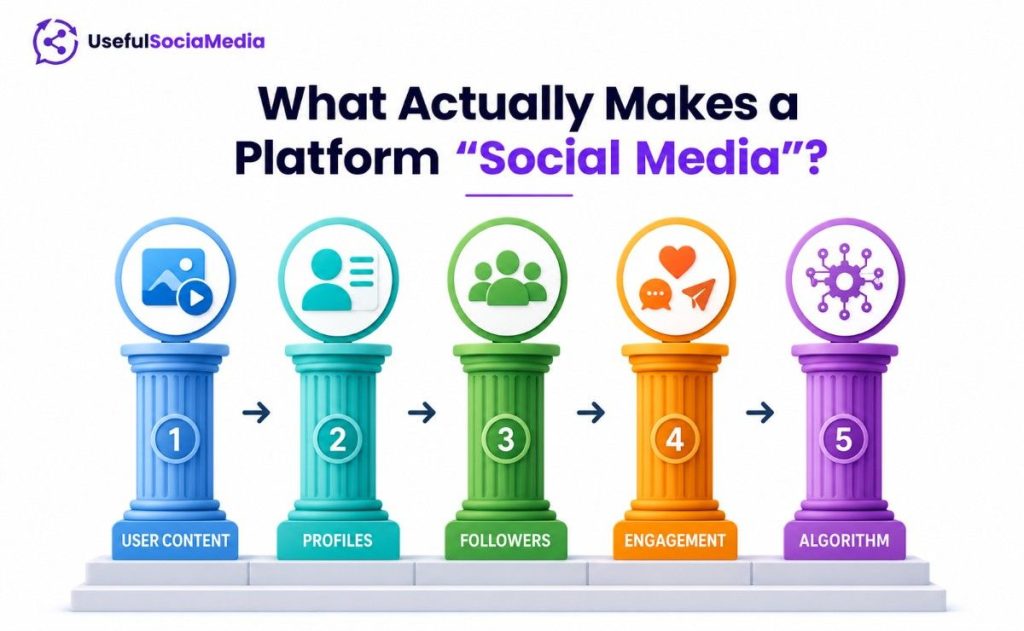
Social media is any platform where people create content, share it with others, and interact around that content.
Most researchers and industry experts have identified five core traits. If a platform has all five, it is social media. Here is how it can be broken down.
| Trait | What it means |
|---|---|
| User-generated content | Regular people create and publish content, not just the company that owns the platform |
| Personal profiles | Users have their own identity on the platforms as a channel |
| Follow or subscribe relationship | Users can choose whose content they want to see regularly |
| Engagement features | Users can like, comment, or share any content |
| Algorithmic discovery | The platform recommends content based on user behavior and interests |
Facebook, Instagram, and TikTok have all five traits.
YouTube also has all five of them. It is not a stretch or a technicality; it is just the reality of how the platform works today.
How YouTube Checks Every Social Media Box
Let’s check each trait in YouTube one-by-one. It will help make things clearer.
1. YouTube is entirely a User-Generated Content Platform
YouTube doesn’t produce videos. Its users do. Every tutorial, music video, vlog, and cooking demonstration on YouTube was uploaded by a person or a brand. The platform just provides the tools and the audience.
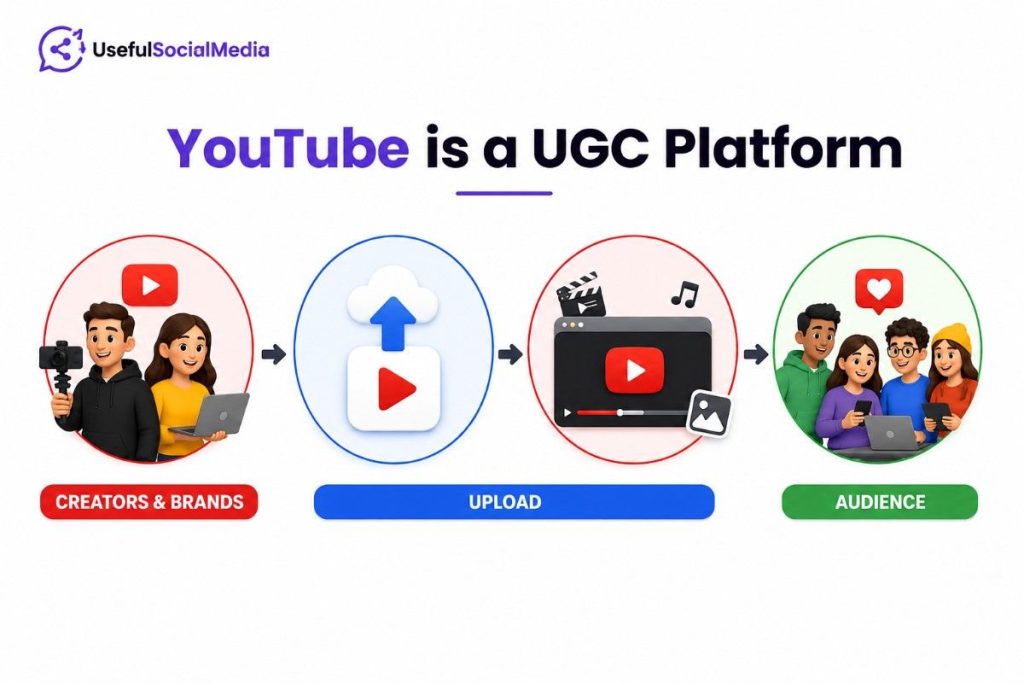
According to YouTube’s official press page, on average, over 20 million videos are uploaded on YouTube daily. That’s an extraordinary volume of user-generated content, more than a platform can claim.
2. YouTube Channels Work Exactly Like Social Profiles
A YouTube channel has a name, a profile picture, a banner image, a bio, external links, and a library of published content.
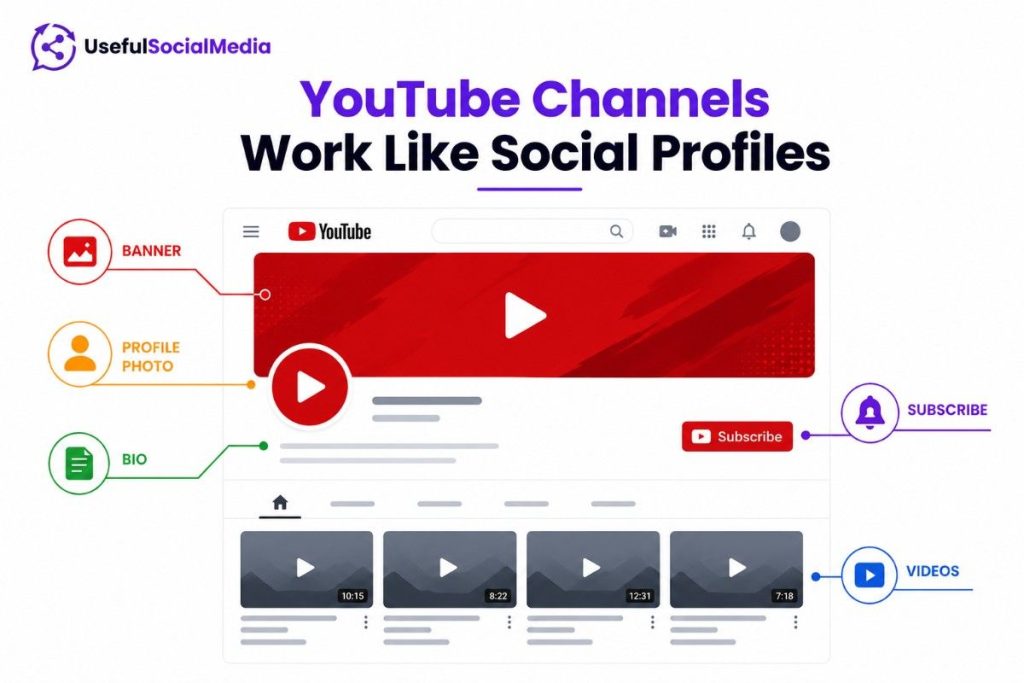
That’s the same structure as a profile on Instagram, LinkedIn, or TikTok. The only difference is that the primary content format is video.
3. Every Subscribe to a YouTube Channel is a Follow
When you subscribe to a YouTube channel, that creator’s new uploads show up in your feed. You can also turn on notifications to get alerts the moment something new goes live.
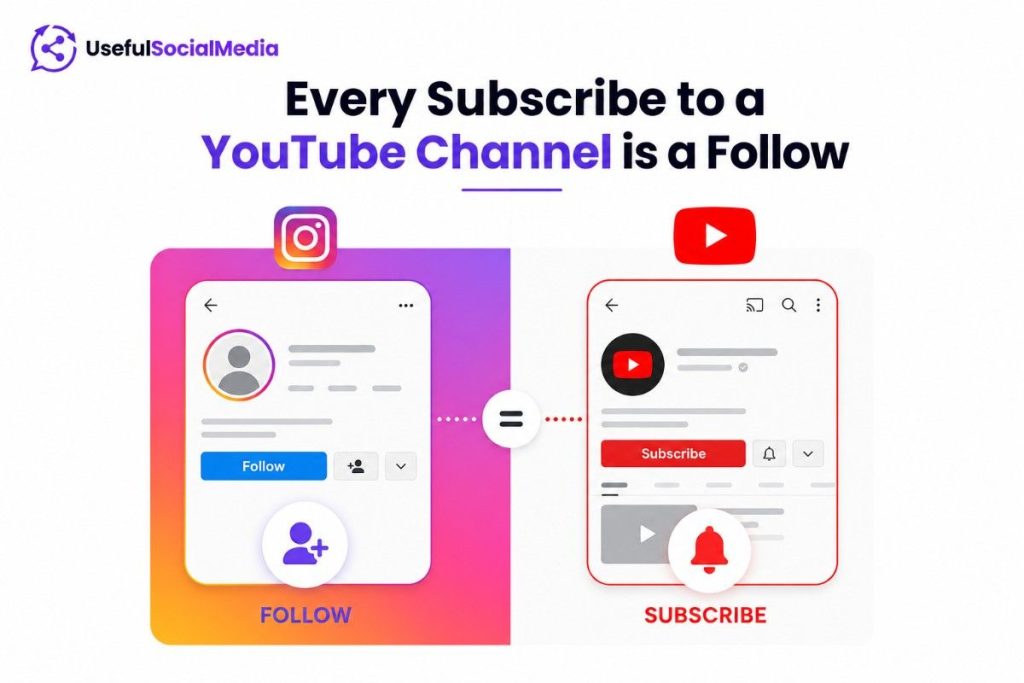
This works identically to following someone on any social network. The vocabulary is different, but the function is the same.
YouTube currently has over 2.58 billion monthly active users worldwide. A huge portion of those users subscribe to channels and return regularly for new content.
Also, find out which country has the most Instagram users with our roundup report.
4. YouTube Comments, Likes, & Shares Drive Conversations
The comment section under a YouTube video can be just as lively as any posts on Instagram or X.
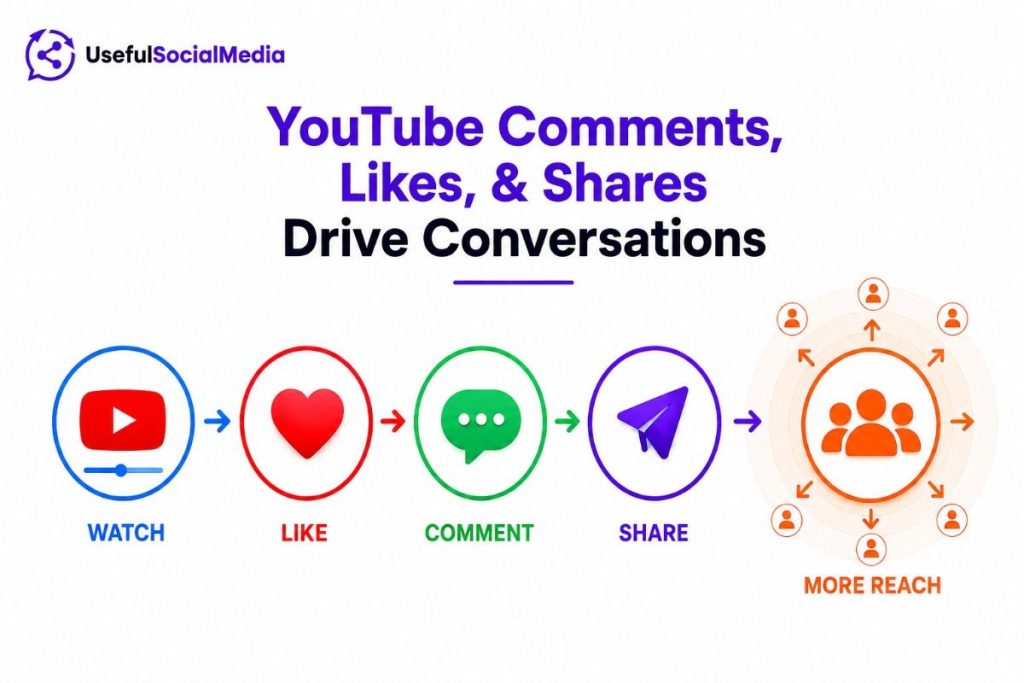
Viewers leave feedback, ask questions, share personal stories, and sometimes start full debates. Creators reply to comments, pin favourites, and use viewer input to shape content in the future.
Likes and shares aren’t just normal metrics here. They directly influence how YouTube’s algorithm decides which videos to recommend to new viewers.
5. Community Posts, Polls & Live Streaming add depth
YouTube’s community tab lets creators post text updates, images, polls, and quizzes between video uploads. It functions like posting on Facebook or X, but to your subscriber base.
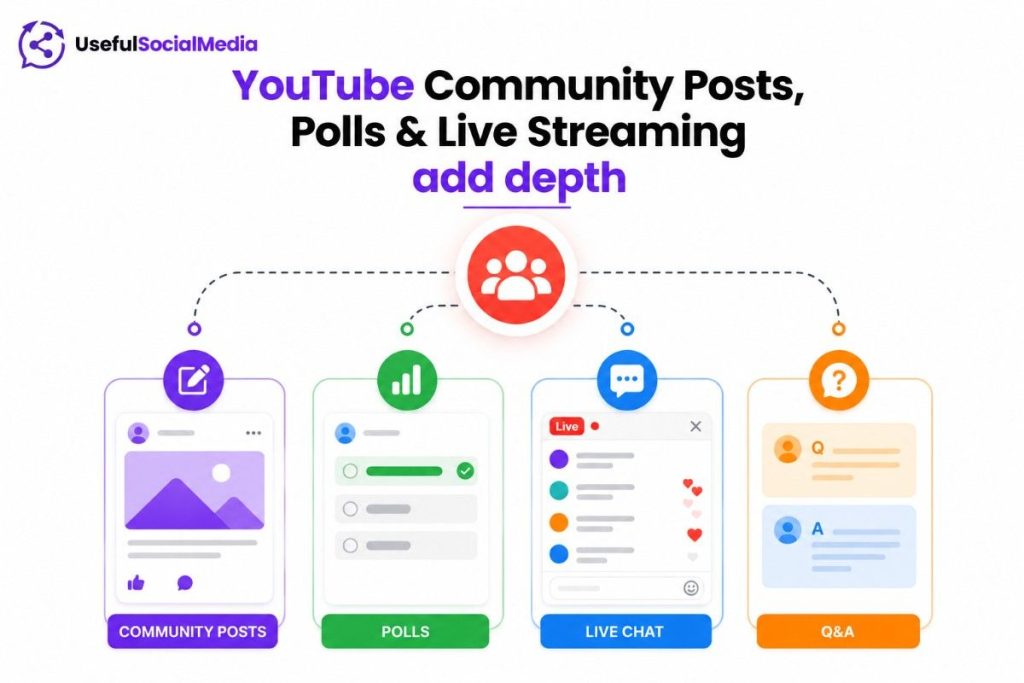
During live streams, viewers can interact through real-time chat, send super Chats (paid highlighted messages), and use super stickers. This turns video watching into an experience.
These are distinctly social features. No traditional video hosting site has them.
YouTube is Also a Search Engine: Key Differentiator
Here’s where YouTube genuinely separates itself from every other social media platform.
People go to Instagram to browse. They go to TikTok to be entertained. They go to YouTube to search for answers.
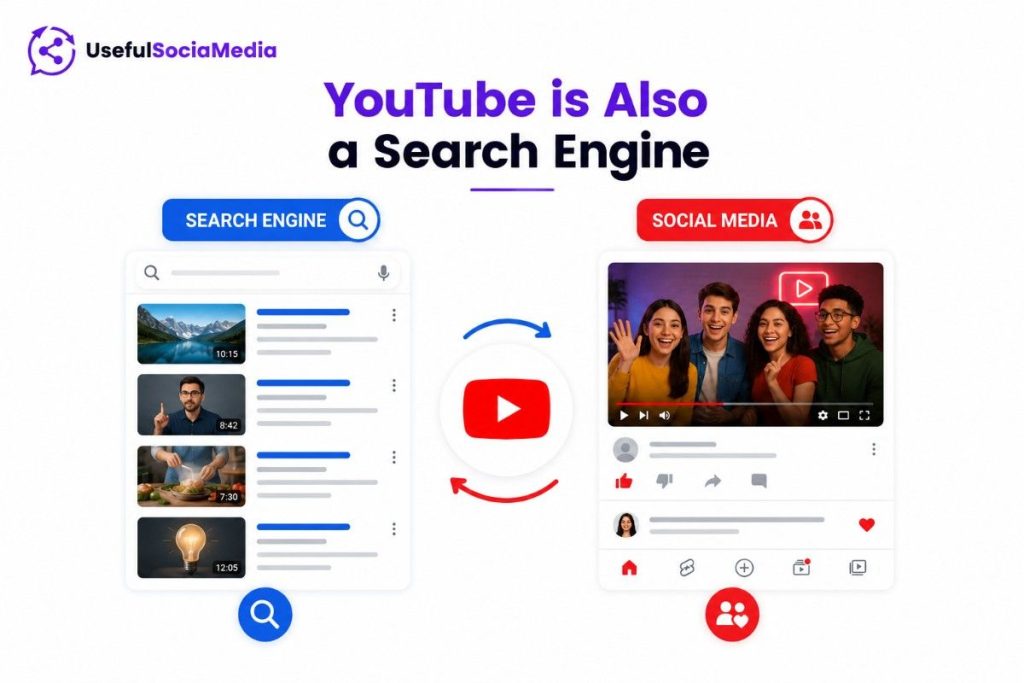
People don’t just scroll YouTube. They search for “How to fix a leaking tap” or “best laptop to buy in 2026.” They are search queries, and YouTube handles billions of them.
YouTube is the second most visited website in the world, right behind Google itself.
So is YouTube considered a social media platform, or is it a search engine?
The honest answer: it’s both. And the combination is what makes it more valuable than platforms that are only one or the other.
On Instagram, a post might get traction for 24 to 48 hours. On YouTube, a well-optimized video can keep getting views for years. That’s search behavior layered on top of social distribution, and no other social platform offers that.
This dual identity is not a flaw in YouTube’s classification. It’s the biggest competitive advantage
How YouTube Compares to Other Social Media Platforms
Understanding where YouTube sits becomes much clearer when you compare it directly to the platforms people typically think of as social media.
| Feature | YouTube | TikTok | ||
|---|---|---|---|---|
| Primary content format | Long-form video, Shorts, livestreams | Reels, photos, Stories | Short-form video | Text, photos, video, groups |
| How users discover content | Search + algorithm + subscriptions | Algorithm + explore + hashtags | Algorithm-driven For You page | Feed + groups + search |
| Engagement tools | Comments, likes, shares, live chat, Community posts, memberships | Comments, likes, DMs, Stories | Comments, likes, duets, stitches | Comments, likes, shares, Messenger, groups |
| Content lifespan | Months to years (evergreen) | Hours to days | Hours to days | Hours to days |
| Creator monetization | Ad revenue, memberships, Super Chats, sponsorships | Brand deals, badges, bonuses | Creator Fund, brand deals | In-stream ads, Stars |
| Search engine behavior | Strong (keyword-driven, ranks on Google) | Moderate (in-app search growing) | Growing (Gen Z uses it for search) | Weak |
The standout point from the table is content lifespan. A TikTok or Instagram Reel has a short window to gain traction. A YouTube video published years ago can still be pulling in thousands of views today if it ranks well for a search query.
That’s why YouTube as a social network offers something the others simply don’t: compounding returns on every piece of content you publish.
Why This Classification Actually Matters
Getting the label right isn’t just an academic exercise. Whether you are a creator, a brand, or an everyday viewer, how you classify YouTube changes how you use it.
For Content Creators
If you think YouTube is just a place to host videos, you’ll upload and disappear.
If you treat it as social media, you’ll reply to comments, post Community updates between uploads, use polls to involve your audience, and build a subscriber relationship that compounds over time.
That behavioral shift matters. YouTube’s algorithm rewards engagement signals like comments, likes, and session time. Creators who actively engage their audience tend to see better reach than those who simply publish and wait.
For Businesses and Marketers
Here’s where the classification has real budget implications.
When a business treats YouTube as a “video production” expense, it usually means one or two campaign videos per year. Those videos get uploaded, shared once, and forgotten. There’s no community management, no consistent publishing calendar, and no performance tracking.
When that same business treats YouTube as a social media channel, everything changes. It gets regular content, audience engagement, analytics reviews, and strategic iteration- the same things you’d give Instagram or LinkedIn.
Google’s Think with Google reports YouTube campaigns achieved measurable results, including a 5.4% lift in ad recall, 93% Search Lift, and improved conversion efficiency for participating brands.
Is YouTube a social media app that deserves a permanent line in your marketing budget? Based on the data, absolutely.
For Everyday Viewers
A lot of people proudly say, “I don’t use social media,” and then spend two hours on YouTube every evening. That’s not a judgment. It’s just worth recognizing.
YouTube collects the same types of data that Instagram and TikTok do: your watch history, your search queries, your location, and your engagement patterns.
Understanding that YouTube is a form of social media helps you make more informed choices about your privacy settings, screen time, and content diet.
YouTube Shorts and the Push Toward Social-First Behavior
YouTube Shorts now pull in more than 200 billion daily views worldwide, a figure YouTube’s own CEO has confirmed.
Functionally, Shorts behave like TikTok or Reels. Vertical, quick, swipeable, and built for discovery rather than deliberate search.
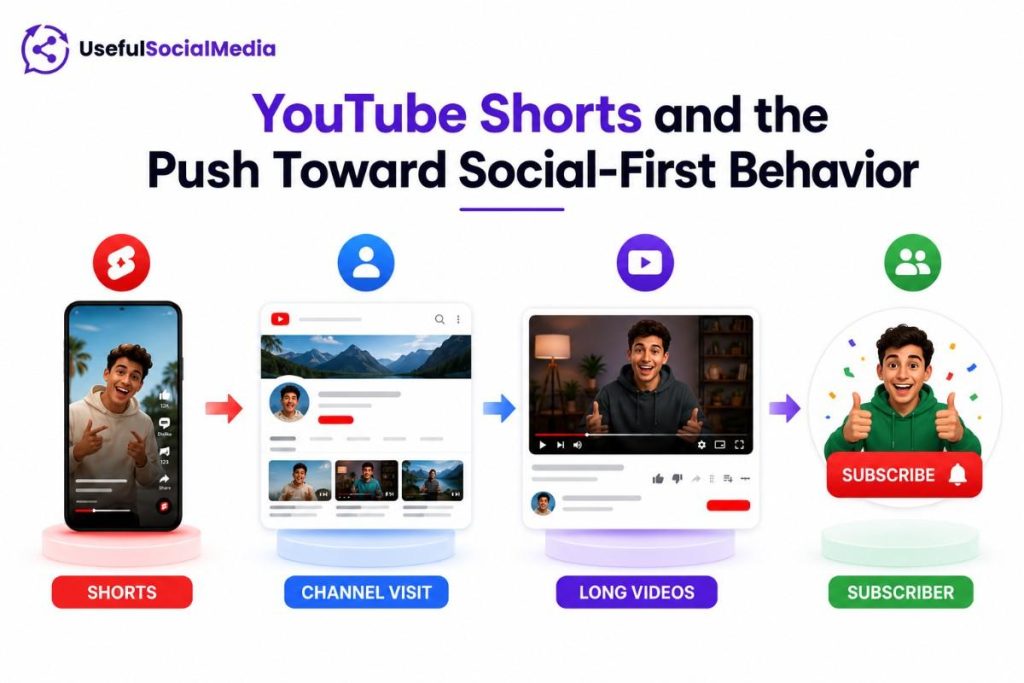
For creators and businesses, Shorts work best as a top-of-funnel discovery tool. They grab attention quickly and introduce new audiences to your channel. The longer, deeper videos on your channel then build trust and drive action.
This combination of short-form (social discovery) and long-form (search-driven depth) is something only YouTube offers. Neither TikTok nor Instagram can replicate it because neither of them has a meaningful search engine built in.
Related reads:
Conclusion: Yes, YouTube is a Social Media Platform
The question “Is YouTube considered social media?” has a clear answer: yes. It qualifies by every standard definition, with user-generated content, subscriber relationships, engagement features, community tools, and algorithm-driven discovery.
What sets YouTube apart is its dual nature as both a social platform and a search engine. That combination gives creators and businesses something no other platform offers: social reach with long-term searchability.
Whether you watch, create, or market on YouTube, treating it as social media is not just accurate. It’s the smarter way to use it.
FAQs
It’s both. YouTube has every social media feature you’d expect: comments, subscriptions, shares, likes, community posts, and live chat. It also has a powerful search engine where users actively look for specific content. These two functions work together. You find content through search, then interact with it socially.
YouTube is the second largest social media platform worldwide. It has over 2.58 billion monthly users globally. It is also the second most-visited website in the world, behind only Google Search.
Because most people use YouTube to watch, not to post personal updates. It doesn’t feel like Facebook or Instagram. But platform classification is based on what a platform can do, not just on how one person uses it. YouTube has profiles, followers, comments, feeds, and algorithmic recommendations, which are the exact traits that define social media.
Yes. Businesses that give YouTube the same consistency, community engagement, and performance tracking they give Instagram or Facebook see better long-term results. The key shift is moving from “let’s make a video” to “let’s build a channel.” That means regular publishing, audience interaction, and strategic content planning.
Absolutely. Shorts are short-form, vertical, algorithm-driven videos with full social engagement features: likes, comments, shares, and subscriptions. They function the same way as TikTok or Instagram Reels and are one of YouTube’s most social-first features.