Around 100,000 views are widely considered the entry point for a viral TikTok in 2026.
Videos that cross 1 million views within 48 to 72 hours are treated as highly viral by most creators and industry experts.
But this number is not fixed. TikTok has never published an official virality threshold. What counts as viral depends on your niche, engagement rate, and how fast those views accumulate.
The Short Answer: How Many Views Count as Viral on TikTok?
There is no specific number that makes a TikTok viral. The general benchmarks used by creators, marketers, and social media analysts in 2026 are as follows.
| Views | How It’s Usually Seen |
|---|---|
| 1K–10K | Normal reach or early traction |
| 10K–50K | Strong performance |
| 50K–100K | Trending for many creators |
| 100K–500K | Viral range |
| 1M+ | Highly viral |
An average TikTok gets roughly 9,400 views in its first five days. Most videos never cross 5,000 views. Any video clearing 100K is already performing far above the platform median.
Why There’s No Fixed Number for a Viral TikTok
TikTok has never defined an official virality threshold. The platform’s Transparency Center explains how the For You Page algorithm works, but it does not assign a view count to the word “viral.”
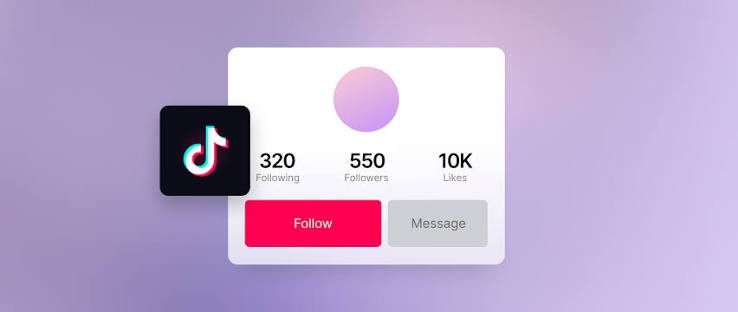
This matters because virality on TikTok is relative. If someone with 500 followers suddenly gets 50,000 views, that’s a huge deal for them. But for someone with 2 million followers, those same 50,000 views actually mean their video didn’t perform well.
Several factors make a fixed number impossible:
- Speed matters: A video reaching 100K views in 12 hours signals virality. The same 100K over three months does not.
- Niche changes the benchmark: A cooking tutorial hitting 200K views is viral. A dance trend needs 1M+ to stand out in a crowded category.
- Account history plays a role: In 2026, TikTok is reported to test videos with a few hundred followers in the first 48 hours before expanding reach. A strong follower base can improve early engagement and initial distribution.
How Many Views Are Viral for Different Types of TikTok Accounts?
Virality looks different at every stage of growth. A new account and a large creator operate under completely different algorithmic conditions.
The table below reflects community benchmarks used by social media analysts in 2026.
| Account Type | Follower Range | Viral Range |
|---|---|---|
| New account | 0–1K followers | 5K–50K views |
| Small creator | 1K–10K | 20K–100K views |
| Mid-tier creator | 10K–100K | 100K–500K views |
| Large creator | 100K+ | 500K–1M+ views |
These ranges are not rules. They are patterns observed across creator performance data.
Moreover, TikTok does not consider follower count as a direct ranking factor. The algorithm evaluates each video independently based on engagement signals. This is why accounts with zero followers still go viral regularly.
What Matters More Than Views for TikTok Virality?
Views alone do not determine virality. TikTok’s algorithm in 2026 weighs engagement signals more heavily than raw view counts.
Understanding these signals explains why some videos with fewer views outperform others with higher numbers.
1. Completion rate is the top signal
In 2024, hitting about 50% watch completion was enough to trigger a viral push. Now, by 2026, you need closer to 70%; TikTok treats it as high-value content and distributes it to wider audiences. Watch time and completion rate account for an estimated 40% to 50% of the For You Page ranking decision.
2. Shares and saves now outweigh likes
In 2025, TikTok changed things up by focusing more on how people actually interact with videos. If someone shares your video or saves it to watch again, the algorithm pays a lot more attention than if they just hit the like button. This is why creating “send to a friend” content drives virality faster than content optimized purely for likes.
3. Comments drive engagement momentum
Active comment sections signal to TikTok that a video is generating conversation. The algorithm tracks comment velocity and sentiment, not just volume.
4. First-hour engagement is critical
Multiple industry analyses suggest that engagement in the first 60 minutes after posting determines a large chunk of a video’s eventual reach. Strong early signals trigger TikTok’s expansion from the initial test pool to broader distribution.
The practical takeaway: a video with 50,000 views and a 75% completion rate will often outrank a video with 200,000 views and a 30% completion rate in terms of ongoing distribution.
Signs Your TikTok Is Starting to Go Viral
Virality rarely happens instantly. Most viral TikToks show specific early signals before they explode.
Recognizing these patterns helps you respond quickly and maximize reach.
| Signal | What It Means |
|---|---|
| Rapid view spikes in the first few hours | The algorithm is actively pushing the video to new audiences |
| High share count relative to views | Strong virality potential; viewers find the content worth sending |
| Increasing watch time | Retention is strong enough for the algorithm to expand distribution |
| Comments growing faster than usual | Engagement momentum is building; signals conversational value |
| Follower counts rising alongside views | Video is converting viewers into followers, a sign of lasting impact |
If you see three or more of these signals within the first few hours of posting, your video is likely entering TikTok’s expansion phase. The next 24 to 48 hours will determine whether it crosses into full viral amplification.
Why Some TikTok Videos Stop Growing After 10K or 20K Views
Many creators experience a frustrating pattern: a video gains quick traction, climbs to 10,000 or 20,000 views, and then flatlines. This is not random. It is the algorithm making a decision.
Here’s how it really works: TikTok rolls your video out to a small group first, maybe 200 to 500 people. If it does well, they show it to more users. But if the engagement drops at that stage, TikTok basically hits pause and stops promoting it. The most common reasons include:
- Low completion rate: Viewers click but scroll away before the video ends. Videos with 60–70% retention are more likely to achieve stronger distribution than those with lower retention.
- Weak hook in the first 3 seconds: 63% of top-performing TikToks deliver value immediately. If viewers drop off in the opening seconds, the algorithm reads it as a signal to stop distributing.
- Audience mismatch: TikTok’s system showed the video to a broader group, but the broader group did not engage in the way the initial test pool did.
- No share or save activity: Views without deeper engagement tell TikTok the content is watchable but not valuable enough to recommend further.
- Engagement bait detection: Tactics like “follow for part 2” or misleading hooks can trigger algorithmic suppression in 2026.
The 10K to 20K range is often where TikTok’s algorithm makes its keep-or-kill decision. Videos that survive this gate typically accelerate rapidly from there.
How Long Does It Usually Take for a TikTok to Go Viral?
Most viral TikToks really take off in the first day or two. If something’s blowing up, you’ll see the biggest jump in views during those first five days after you post it.
Here is what the typical viral timeline looks like:
- First 1 to 2 hours: TikTok shows the video to the initial test pool (200 to 500 users). Strong engagement here triggers expansion.
- 2 to 12 hours: If the video passes the first gate, TikTok pushes it to 5,000 to 50,000 viewers. This is the growth phase where viral signals become visible.
- 12 to 48 hours: Videos that maintain strong metrics enter viral amplification. Views can jump from tens of thousands to hundreds of thousands or millions.
- 3 to 7 days: Highly viral content continues accumulating views, but the growth rate slows as the algorithm shifts focus to newer content.
Not all viral videos follow this pattern. Some take 24 to 72 hours of slow growth before suddenly exploding. The TikTok algorithm re-evaluates videos periodically, and a video that initially stalled can get a second push if audience behavior shifts.
Can an Old TikTok Go Viral Weeks or Months Later?
Yes. TikTok’s algorithm regularly resurfaces older content. Unlike platforms where content has a fixed lifespan, TikTok can re-test a video at any time if it detects renewed engagement signals.
This happens for several reasons:
- Evergreen topics: Videos about cooking tips, life hacks, or educational content remain relevant long after posting. When new users search for those topics, TikTok surfaces the best-performing older videos.
- TikTok search is growing: Gen Z now searches on TikTok before Google for many queries. This means older videos optimized with keywords in captions, on-screen text, and spoken audio can gain new views months later.
- Algorithm re-testing: When you post consistently, TikTok sometimes re-evaluates your older content. A video that sat at 300 views for months can suddenly be pushed to new audiences.
- Trend cycles: If a new trend aligns with an older video’s topic, TikTok may resurface it to capitalize on current interest.
The practical lesson: never delete old TikToks. A video that flopped today could become your best performer six months from now.
What to Do When Your TikTok Starts Going Viral
When a video starts gaining unusual traction, your next moves determine whether you convert that momentum into lasting growth or waste it.
Here is what you can do:
- Do not edit or delete the video: Any changes can reset the algorithm’s distribution. Let it run.
- Respond to comments quickly: Active engagement in the comment section signals ongoing value to the algorithm. Reply with video responses for extra reach.
- Post a follow-up video within 24 hours: New viewers will check your profile. Having fresh, related content keeps them engaged and increases follow rates.
- Pin the viral video to your profile: This ensures new visitors see your best-performing content first.
- Avoid going silent after the spike: Posting three to five times per week is the 2026 sweet spot. Staying consistent shows the platform you’re active and makes it more likely your content gets shared.
The biggest mistake creators make is treating a viral video as a one-time event. But really, when something goes viral, it means both the algorithm and your audience liked something about it. So, dig into what made it work and see if you can repeat that magic.
Common Myths About Viral TikTok Views
Myth 1: You need millions of views to be viral.
Reality: For a small creator with 1,000 followers, 10,000 views represent a viral moment. Virality is relative to your baseline, not an absolute number.
Myth 2: You need a large following to go viral.
Reality: TikTok has confirmed that follower count is not a direct ranking factor. The algorithm evaluates each video independently. Accounts with zero followers go viral regularly on TikTok.
Myth 3: Posting at the “right time” guarantees virality.
Reality: Posting time matters, but content quality matters more. A strong video posted at an off-peak hour will outperform a weak video posted at peak time.
Myth 4: Deleting a low-performing video and reposting it works better.
Reality: TikTok spots duplicate content easily. If you re-upload the same video, there’s a good chance the platform will suppress it. Sometimes, old videos suddenly do well because the algorithm gives them a second look. So, what flopped today could take off tomorrow.
Myth 5: Longer videos cannot go viral.
Reality: TikTok now actively rewards longer videos of 1 to 3 minutes in 2026 because longer watch time per viewer is more valuable to the platform. The key is maintaining a 70%+ completion rate regardless of length.
Conclusion: Around 100K Views is usually considered Viral on TikTok
TikTok does not define virality with an official number. The consensus among creators and analysts in 2026 places the viral threshold at 100,000 to 1 million views, depending on account size and niche.
But raw views are only part of the picture. Completion rate, shares, saves, and engagement velocity matter just as much. Focus on creating content that holds attention, and the views will follow.
FAQs
No. 1,000 views is normal early traction for most accounts. It indicates your video reached TikTok’s initial test pool but did not generate enough engagement to expand to broader audiences.
TikTok pays creators through the Creativity Program (formerly the Creator Fund), which requires at least 10,000 followers and 100,000 views in the last 30 days.
Yes. Hashtags make it easier for TikTok to sort your videos, but honestly, the algorithm cares way more about how people interact with your content. If people stick around, share it, or finish your video, that’s what really pushes it out to more viewers. Still, if you use three to five hashtags that actually fit your video, you’ll show up more often in TikTok searches.
There isn’t a set number you have to hit each hour. But if your video keeps pulling in over 10,000 views an hour during those first 12 hours, that’s a big sign it’s going viral.